
Heads: Univ.-Prof. DDr. Kurt Greiner & Ass.-Prof. Dr. MMag. Martin Jandl
kurt.greiner@sfu.ac.at / martin.jandl@sfu.ac.at (Gallery-Office 4003)
Faculty of Psychotherapy Science (PTW) at Sigmund Freud University Vienna (SFU)
PTW research foci, under which all activities of the institute fall: Hermeneutic therapy school research, therapy school dialogue/therapy school interdisciplinary research, psychotherapy science theory and psychotherapy science philosophy. As this institute considers the subject of psychotherapy science (PTW) as a paradigm pluralistic psychoscience culture, all activities are in the service of therapy school diversity.
1) Experimental psychotherapy science aka psychotextology (synonym) is the teaching of text-scientific research into psychotherapeutic theories. At present, this basic research discipline, which began to crystallise at SFU Vienna in 2007, consists of the following four methodological programmes (A-D), within which basic knowledge about implicit conditional and presuppositional structures underlying the explicit teachings and concepts of individual psychotherapy modalities is created using diverse experimental and imaginative hermeneutic procedures:
- Method programme A: Standardised therapy dialogue (procedure A.1).
- Method programme B: Text-puzzle procedure (procedure B.1/B.2/B.3)
- Method programme C: Psycho-picture methods (methods C.1/C.2/C.3/C.4/C.5)
- Methods programme D: Media-play techniques (Procedures D.1.a-c/D.2.a-c)
2) Psychotherapy philosophy sees itself as an auxiliary science of psychotherapy science and comprises the following core areas:
- Linking psychotherapy and philosophy of science to generate a genuine understanding of psychotherapy science.
- Reflection on images of the human being from all schools of psychotherapy by reading psychotherapeutic texts not only in clinical terms, but also by relating them to philosophical anthropology
- Critical reflection on the dominance of some schools of psychotherapy, the clinical focus and the increasing diagnostics, thus the psychologisation of PTW in the sense of a scientific variable-oriented psychology
- Rejection of the equation of psychotherapy science with (quantitative or qualitative) psychotherapy research
- Support of experimental psychotherapy science by reflecting and ordering insights gained through experimental and imaginative hermeneutics.
- Philosophical reflection on central psychotherapeutic concepts (e.g. therapeutic alliance, dream, emotions, pathology, unconscious, non-discursive knowledge of self, etc.).
- Discourse analysis and reflection of self-technologies and self-techniques
- Strengthening the socio-critical potential of psychotherapy schools
Academic Activities
Lectures & Training
Our staff regularly teach in our BA, MA and PhD programmes. A selection of courses in which you can learn about our research methods and science projects:
- Science and Research Methodology I (VO+UE, B2) Prof. Greiner & Ass.-Prof. Jandl
- Science and Research Methodology II (VO, B4) Prof. Greiner & Ass.-Prof. Jandl
- Methods of qualitative psychotherapy research (VO, M2) Prof. Greiner
- Hermeneutic research (SE, DOK) Prof. Greiner
- Philosophy of science (SE, DOK) Prof. Greiner
- Privatissimum (Ao. LV) Prof. Greiner & Ass.-Prof. Jandl
- Lecture series – Perspectives of Psychotherapy Science, Prof. Greiner
- Research Lab “Philosophy, Hermeneutic and Dialogical Research in Psychotherapy” (Ao. LV) Ass.-Prof. Jandl & Prof. Greiner
- Workshop Philosophy (Nietzsche, Hume, Ryle, Kant, Merleau-Ponty), (mixed undergraduate-graduate) Ass.-Prof. Jandl
- Existential Philosophy (graduate) Ass.-Prof. Jandl
- The better consciousness and the will – Schopenhauer (graduate) Ass.-Prof. Jandl
Supervision of theses
Within the framework of Experimental Psychotherapy Science (Psychotextology), there are now approximately seventy (70, as of 2022) completed and approved qualifying studies, distributed across all three graduation levels: Baccalaureate, Master’s, Doctorate. In these studies, research was conducted using the following methods of our Institute:
- Programme Sector A: Standardised Therapy Schools Dialogue (TSD)
Method A.1: Experimental Trans-Contextualisation (ExTK) - Programme sector B: Text Puzzle Method
Method B.1: Classic psycho-text puzzle (P-T-P)
Method B.2: Intertherapeutic Text Puzzle (ITTP) - Programme sector C: Psycho-picture Methods
Method C.1: Classic Psycho-Picture Process (PBP)
Method C.2: Intertherapeutic Picture Process (ITBP)
Method C.3: Small Psycho-Building Game (PBS/k)
Method C.4: Large Psycho-Image Game (PBS/g) - Programme sector D: Media game techniques
Methods D.1.a-c: Classic Psycho-Media Games (PMS)
Methods D.2.a-c: Intertherapeutic Media Games (ITMS)
Research & Publications
Current research projects
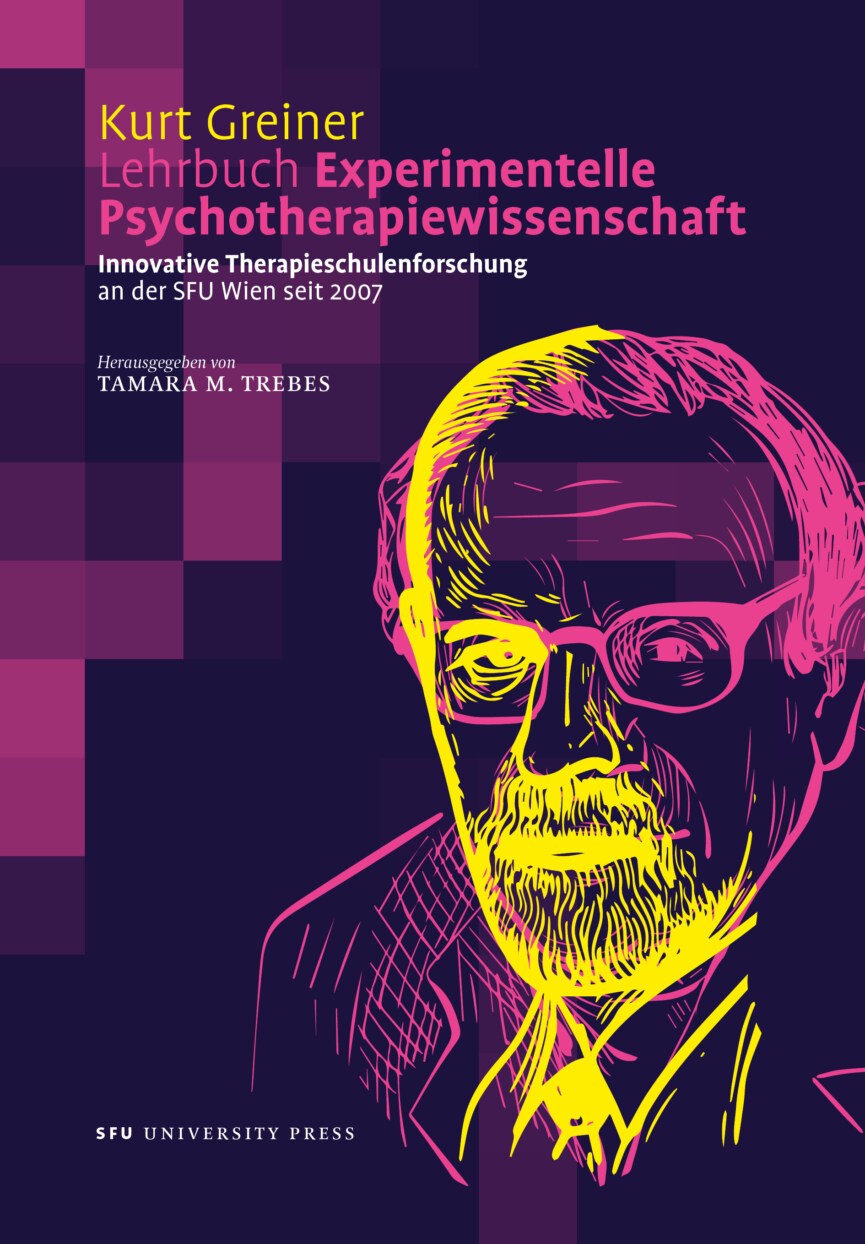 Textbook EXPERIMENTAL PSYCHOTHERAPY SCIENCE
Innovative therapy school research at SFU Vienna since 2007
Author: Kurt Greiner / Editor: Tamara M. Trebes / SFU Press, Vienna 2024
ISBN: 978-3-902626-88-2
Experimental psychotherapy science – which is not related to experimental psychology – is an applied psychotextology, an explicitly text-scientific field of research in which theoretical texts of psychotherapy (subject matter) are critically and reflexively analysed with the help of specially designed experimental and imaginative hermeneutic procedures (method).
As the first comprehensive overall compilation, this textbook offers a well-founded overview of this programme of innovative therapy school research, which began to take shape in 2007 and is now established as a basic research discipline at the Sigmund Freud University (SFU) Vienna. Within the structural framework of three large sections, detailed insights are first offered into the philosophical foundations and the object specifics (I. Part Basic Theory), then the differentiated operational systems of the broadly developed spectrum of procedures are presented in terms of structure and processuality (II. Part Methodology) and finally their empirical testing in the context of psychotherapeutic application practice is sketchily presented (III. Part Research Documentation).
- The textbook is available at our SFU-Shop.
“ADVENTURE BIZARROSOPHY. Experimental and Imaginative Hermeneutic Expeditions in the Science of Psychotherapy”.
Anthology project in the Libri Nigri series published by Traugott Bautz, Nordhausen. Editors: Martin J. Jandl & Kurt Greiner
Publications
List of Publications (PDF; in German)
Contact
Heads | Requests for cooperations

Univ.-Prof. DDr. Kurt Greiner
Mail: kurt.greiner@sfu.ac.at
Tel.: +43 1 798 40 98 408
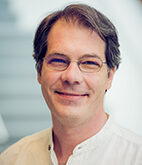
Ass.-Prof. Dr. MMag. Martin Jandl
Mail: martin.jandl@sfu.ac.at
Tel.: +43 1 798 40 98 453
Institute for Psychotextology and Philosophical Psychotherapy Studies
Faculty of Psychotherapy Science
Sigmund Freud University Vienna
Gallery Office 4003, 4th floor
Freudplatz 1
1020 Vienna