
The Institute for Futures Research in Human Sciences is engaged in the field of interdisciplinary futures and innovation research – with a special focus on the human and social sciences.
- “Futures Research” (prospective research) is a globally widespread field of research that deals with bio-psycho-social, socio-cultural, economic, ecological and political processes of change in a critical-analytical as well as action-oriented manner.
- Based on the analysis of the historical development and the current characteristics of a research object (=diagnosis), plausible assumptions about future developments are made (=forecast). In the process, several development possibilities (=”futures”) are often taken into account in the form of scenarios.
- In most cases, recommendations for concrete goals, plans, strategies and measures for shaping the future are also derived from these prognostic assumptions.
- Beyond these foresighted research activities, future-related opinions of the population (= future images) are also collected representatively in futures research projects and interpreted in a theory-based manner.
- In addition, the extremely complex human ability of “thinking about the future” is researched both psychodynamically and neuropsychologically and – with regard to collective future images and utopias – ethnologically and sociologically.
- In this context, technologies relevant to the future and social innovation processes are also examined with regard to the opportunities and dangers for individual personality development as well as for humane and cooperative social development.
- Another important topic of futures research is the clarification of the basic scientific-theoretical question of whether – and if so, with which methods and theories – serious statements about future developments are possible.
Head: Univ.-Prof. Dr. Reinhold Popp, e-mail
Academic Activities
- Co-editor of the peer-reviewed open access journal “European Journal of Futures Research (EJFR)” published by the renowned scientific publisher “Springer International” (part of SpringerNature).
- Series of publications “Zukunftswissenschaft/Zukunftsforschung” at LIT-Verlag.
- Scientific cooperation with the “Institut Futur” at the University of Excellence FU Berlin and the Master’s programme for futures research run there.
- Scientific cooperation and networking with the most important experts and institutes for prospective research as well as with prominent institutions of future-related science communication (e.g. “Futurium” Berlin).
- Supervision and review of dissertation projects with an explicit reference to the future or innovation.
- Teaching (SFU doctoral programme PTW) on philosophy of science, research methodology and research management.
- Active in publications and lectures (see: www.reinhold-popp.at).
- Interviews, commentaries, etc. on future issues in magazines, daily newspapers, radio and television.
Research and Publication Projects
“European Journal of Futures Research”: Prof. Reinhold Popp (Sigmund Freud University Vienna: Institute for Futures Research in Human Sciences) is the editor of the European Journal of Futures Research (EJFR) together with Prof. Christine Ahrend (Technische Universität Berlin), Prof. Gerhard de Haan (Freie Universität Berlin), Dr. Erik Overland (World Futures Studies Federation) and Prof. Ulrich Reinhardt (Stiftung für Zukunftsfragen Hamburg). The editorial office is located at the Institut Futur of the Freie Universität Berlin and is realised in cooperation with the World Futures Studies Federation. The EJFR is an international journal that publishes peer-reviewed articles on all aspects of futures studies. The journal, with a special focus on Europe, is interdisciplinary. It focuses on topics and issues of particular relevance to Europe and thus provides a platform on which possible, desirable, plausible and probable futures can be scientifically pre-conceived and planned. See “Aims and Scope” of the EJFR at www.springer.com/40309 The EJFR is published by the internationally renowned scientific publisher Springer (as part of SpringerNature) in electronic form (Open Access) in English.
“Futures Studies & Psychodynamics”: In this research and publication project, the need for prospective research in the field of psychology and psychotherapy science was systematically investigated for the first time in the German-speaking world. A summary of the results of this project can be found in the book: Reinhold Popp, Bernd Rieken and Brigitte Sindelar (2017) Zukunftsforschung und Psychodynamik. Future thinking between fear and confidence. (Münster: Waxmann). This publication also includes contributions by PhD students Julia S. Grundnig, Nils Guse and Tassilo Niemetz.
“Brave new world of work? What comes, what stays, what goes?”: Under this title, the summary of the results of the research project of the same name on the medium-term development of the world of work in Germany, which has been running since 2017, was published at the beginning of 2018. In this project, Univ. Prof. Dr. Reinhold Popp cooperated with the Hamburg Foundation for Future Issues (Prof. Dr. Ulrich Reinhardt).
“Future:Occupation:Quality of Life. 77 Keywords from A to Z”: This was the title of a book published by LIT-Verlag in autumn 2018, in which Univ.-Prof. Dr. Reinhold Popp published the results of the project of the same name, which has been running since October 2017.
“Futurology & Disaster Research”: Univ.-Prof. Dr. Reinhold Popp participated in the conference “Angst in der Katastrophenforschung” (6-9.06.2018, Alpenhotel Gösing) as well as – with the contribution “Angst und Methode in der Zukunftsforschung. Implikationen für die Katastrophenforschung” – in the anthology edited by Univ.-Prof. Dr. Dr. Bernd Rieken (SFU) and published in spring 2019.
“Future of the world of work. Perspectives and Forecasts for Germany and Austria”: This publication project was coordinated by Univ.-Prof. Dr. Reinhold Popp in 2018/19. Cooperation partners: Mag. Julia Bock-Schappelwein (WIFO: Economic Research Institute, Vienna), Mag. Ursula della Schiava-Winkler (SFU Vienna), Dr. Helmut Mahringer (WIFO: Economic Research Institute, Vienna), Prof. Dr. Ulrich Reinhardt (Stiftung für Zukunftsfragen, Hamburg), Mag. Dr. Monika Spiegel (Institute for Psyche and Economy, SFU Vienna). The results were published in an anthology in the first quarter of 2019.
“Future Vision Germany. Innovation for Progress and Prosperity”: In this publication project, Univ.-Prof. Dr Reinhold Popp (Institute for Futures Research in Human Sciences, SFU Vienna) and Prof. Dr. Ulrich Reinhardt (Stiftung für Zukunftsfragen, Hamburg) cooperated with Univ.-Prof. Dr Marion A. Weissenberger-Eibl (Fraunhofer Institute for Systems and Innovation Research ISI, Karlsruhe Institute of Technology KIT). The contribution by R. Popp and U. Reinhardt (“Zwischen Zukunftsangst und Zuversicht. 40 Opinions of Germans on the Change of the Working World”) was published in 2019 in an anthology edited by M. A. Weissenberger-Eibl.
“Futurium: Science Communication on Future Issues”: Univ.-Prof. Dr. Reinhold Popp supports the diverse activities of the “Futurium” in the form of consulting services from the perspective of prospective research, participation in several public panel discussions, the publication of a contribution in the exhibition catalogue, through interviews and articles in Berlin newspapers (Tagesspiegel and Berliner Morgenpost), and through involvement in the project “Thinking about the Future in Literature and Science”, briefly outlined below, as part of a cooperation agreement that runs until 2023.
In addition, R. Popp published a text in the exhibition catalogue and S. Brandt contributed forewords to two publications by R. Popp (“Zukunft & Forschung …”, 2020, and “Zukunftsdenken …”, 2021).
The Futurium was founded on the initiative of the German Federal Government and together with leading German science organisations and foundations as an independent platform for dialogue and networking between the state, science, business and society and officially opened in autumn 2019. The architecturally very appealing Futurium building is situated in the direct vicinity of the German Federal Ministry of Education and Research in Berlin. It houses Europe’s only “future museum” with living scenarios, a future laboratory for trying things out, a future forum for collaborative dialogue and a future stage for artistic projects.
“Thinking about the future in literature and science”: Since 2018, Univ.-Prof. Dr Reinhold Popp has been involved in the major publication project “2029 – Geschichten aus der Zukunft” by Suhrkamp-Verlag, Futurium Berlin and the German broadcasters NDR and WDR. This project served as an encounter between elevated science fiction literature and future-related research. In this context, Reinhold Popp dealt with the science fiction stories collected in the above-mentioned volume from the perspective of prospective research. The book was presented at a ceremony on 24.10.2019 at the Futurium in Berlin.
“Future & Research. The Diversity of Foresight”: This research and publication project, which ran from 2018 to the first quarter of 2020, dealt with the fundamental question of how future-oriented science arrives at its knowledge. In this context, Univ. Prof. Dr. Reinhold Popp traced the historical forms of future thinking and briefly described the most important technical terms, theories and methods of prospective research. In doing so, the great diversity of foresight was taken into account, both in the traditional scientific disciplines and in the newer and interdisciplinary approaches of innovation, risk, technology impact and futures research. The results of this project were published in the book “Zukunft & Forschung. The diversity of foresight …” in the form of 66 keywords arranged alphabetically.
Interdisciplinary anthology “Eco-anxiety. Future Anxiety and Climate Change” (Waxmann-Verlag, publication year 2021): In this publication project, the Institute for Futures Research in Human Sciences at SFU Vienna (Univ.-Prof. Dr. Reinhold Popp) cooperates with the Institute for Psychoanalytical-Ethnological Disaster Research at SFU (Univ.-Prof. Mag. DDr. Bernd Rieken and Mag. Paolo Raile):
Exceptional weather phenomena such as the 2018 summer of drought and heat in the northern and central parts of Europe or the 2019/20 bushfires in Australia are widely echoed in the media and in everyday narratives. Climate change issues are therefore no longer confined to the academic sphere. Rather, they are now also being discussed by broad sections of the population. This is made clear by the Fridays for Future movement, among others, but also by the sometimes violent reactions to it.
According to this, climate change evokes emotions, including fear or anxiety about the future. In the USA, there is already a separate term for this, namely “eco-anxiety”, which the American Psychological Association describes as “a chronic fear of environmental doom”.
The connection between climate change and fear or anxiety about the future will therefore be the focus of this new publication. This publication project is interdisciplinary. In this sense, the contributions come from different disciplines and research directions (e.g. psychotherapy science, psychology, disaster and security research, ethnology, geography, geology, climatology, historiography, futures research, theology).
“Thinking the Future. The Art of Foresight”: This research and publication project was realised by the Institute for Futures Research in Human Sciences at Sigmund Freud-PrivatUniversität (SFU) Vienna (Reinhold Popp, Julia S. Grundnig) from January 2020 to March 2021. As part of this project, the following book was published in April 2021: Popp, Reinhold; Grundnig, Julia (2021): Zukunftsdenken. The Art of Foresight. Vienna, Münster: LIT-Verlag.
“Prospective Science & Participatory Future Design”: This publication project will be realised from September 2020 to March 2022 by the Institute for Futures Research in Human Sciences at Sigmund Freud University (SFU) Vienna (Reinhold Popp) in cooperation with excellent young researchers.
Publications / Media coverage
Please note that all publications below are in German.
New book publications
- Reinhold Popp (Hrsg.): Zukunftsbilder und Zukunftsforschung
- Reinhold Popp, Julia S. Grundnig: Zukunftsdenken. Die Kunst der Vorausschau
- Reinhold Popp, Konrad Ott: Die Gesellschaft nach Corona: ökologisch & sozial Perspektiven für Deutschland & Österreich
- Reinhold Popp: Zukunft & Forschung. Die Vielfalt der Vorausschau
Overview Publications
www.reinhold-popp.at and in the SFU Publication Database: Reinhold Popp | Publikationen mit SFU-Affiliation ab 2010
Media coverage
Neues Bildungsbewusstsein nötig: Schulreform ist unverzichtbar | Salzburger Nachrichten, 07.04.2022
Zeit nach Corona: „Eine Grundangst wird bestehen bleiben“ | Kurier, 14.06.2020
Anti-Flynn-Effekt: Warum unser IQ sinkt | futurezone.at, 15.07.2019
Keine Panik, die Zukunft kommt | Der Standard, 15.02.2019
Contact
Head:
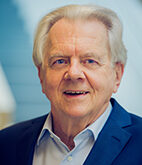
Univ.-Prof. Dr. Reinhold Popp
Tel.: +43 660 493 60 33
E-Mail: rp@reinhold-popp.at oder reinhold.popp@mail.sfu.ac.at
Website: www.reinhold-popp.at
Visiting scholar:

Dr. Julia S. Grundnig
Tel.: +43 699 19 56 76 86
E-Mail: julia.grundnig@sfu.ac.at

Dr. Mag. Michael Mitterwallner, MSc.
Tel.: +43 650 96 26 003
E-Mail: mitterwallner.michael@gmail.com

Prof. (FH) Dr. Marianne Schwab
Tel.: +43 664 4133988
E-Mail: marianne.schwab@sol.at
Address:
Institute for Futures Research in Human Sciences
Faculty of Psychotherapy
Sigmund Freud University
Freudplatz 3, 1020 Vienna
6th floor, room no. 604